Catalytic Converter Service
Expert Catalytic Converter Service & Replacement
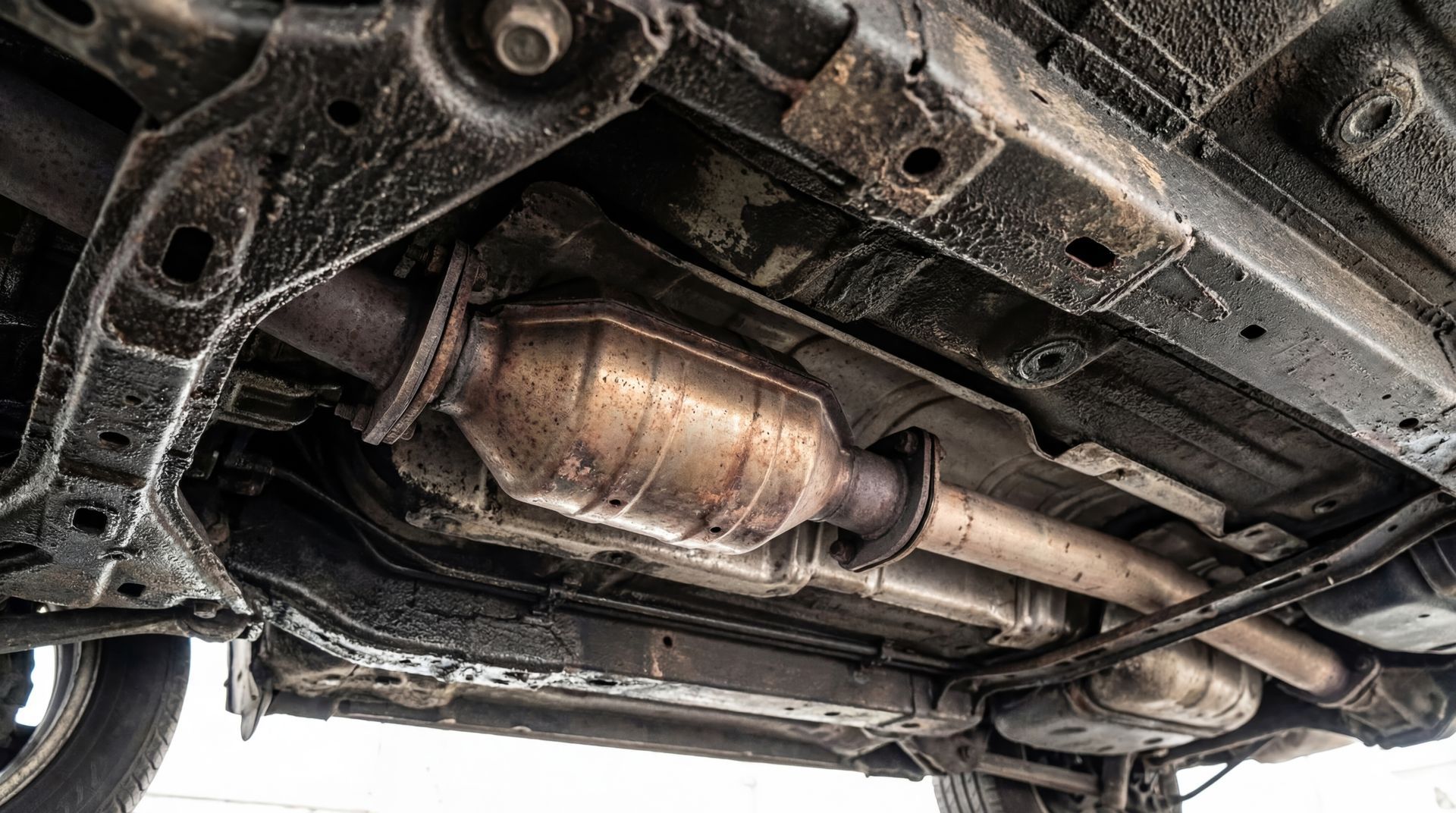
Your vehicle’s catalytic converter is the unsung hero of your exhaust system. It’s responsible for converting harmful pollutants into less toxic gases before they ever leave your tailpipe. When it fails, you’re looking at more than just a failed emissions test—you’re looking at reduced fuel economy and potential engine damage.
At Woodcrest Auto Service, we provide comprehensive diagnostics and professional replacement services to get your vehicle running cleanly and efficiently again.
Signs Your Catalytic Converter Needs Attention
The symptoms of a failing converter areThe clutch disengages the transmission from the engine and allows it to change gears. It engages while the transmission changes gears, releasing afterward.
- The "Check Engine" Light: Often triggered by code P0420 (Catalyst System Efficiency Below Threshold).
- Sluggish Performance: A clogged converter can create backpressure, making your car feel like it’s lost its "get-up-and-go."
- The Smell of Rotten Eggs: This is caused by unburned sulfur resulting from poor filtration.
- Rattling Noises: If the internal ceramic honeycomb structure breaks, you’ll hear it vibrating inside the housing.
- Poor Fuel Economy: Your engine has to work harder to push exhaust through a restricted converter, burning more gas in the process.
Our Diagnostic & Service Process
We don’t believe in just "throwing parts" at a problem. Our technicians perform a multi-step evaluation to ensure a replacement is actually necessary.
| STEP | ACTION | PURPOSE |
|---|---|---|
| 1. | Computer Scan | Retrieve specific trouble codes from the ECU. |
| 2 | Backpressure Test | Measure if the exhaust flow is physically restricted. |
| 3 | Visual Inspection | Inspect the converter and exhaust piping for damage, rust, leaks, loose heat shields, or impact marks. |
| 4 | Emissions Analysis | Evaluate the chemical output to confirm the converter is no longer "scrubbing" the air. |
What Causes Catalytic Converter Failure?
- Engine misfires or rich fuel mixture: Unburned fuel can overheat and melt the internal substrate.
- Oil or coolant burning: Contaminants can coat the catalyst and reduce efficiency.
- Exhaust leaks or faulty oxygen sensors: Incorrect readings can cause the ECU to run the engine too rich or too lean.
- Physical impact or severe rust: Road debris and corrosion can crack the housing or break internal components.
Why Choose Professional Replacement?
Catalytic converters are high-value components that require precision. We offer:
- Direct-Fit OEM & High-Quality Aftermarket Options: Ensuring the replacement meets or exceeds your vehicle’s original specifications.
- Compliance Guaranteed: We ensure all replacements meet local and federal emissions standards (including CARB standards where applicable).
- Expert Welding & Installation: Our team handles the heavy lifting, ensuring a leak-free seal that protects your engine’s longevity
Pro Tip: A failing catalytic converter is often a symptom of another issue, like a misfiring spark plug or a faulty oxygen sensor. We fix the root cause so your new converter doesn't fail prematurely.
Catalytic Converter Cost: What Affects Pricing?
Pricing varies widely by vehicle and emissions requirements. The biggest factors typically include:
- Vehicle year/make/model and engine size
- Direct-fit vs. welded/universal installation needs
- Emissions compliance requirements (EPA vs. CARB where applicable)
- Related repairs needed to prevent repeat failure (misfire, exhaust leak, oxygen sensor, etc.)
Schedule a Catalytic Converter Inspection
If your Check Engine light is on (especially with a P0420/P0430 code), you’re noticing a rattling sound, or acceleration feels sluggish, we can diagnose the cause and recommend the right repair. Share any warning lights, codes, or recent repairs when you book—those details help us pinpoint the issue faster.
Catalytic Converter FAQs
- Can I keep driving with a bad catalytic converter? Sometimes, but it can lead to poor performance, overheating in the exhaust, and additional engine or exhaust damage—especially if the root cause is a misfire.
- Will a catalytic converter cleaner fix it? Additives may help in limited cases, but they won’t repair a melted, broken, or heavily contaminated converter. Proper testing is the best first step.
- Do I need to replace oxygen sensors too? Not always. We test sensor performance and recommend replacement only if readings are incorrect or sensors are damaged/aged.